For thousands of years, since the Babylonians and before, humans have studied the mysteries of pure mathematics. These studies probably started practically, as ways to understand the stars and the world around us as well as economics and government, but quickly turned to the beauty of pure math: number theory, proofs, irrational numbers and geometry. Unlike most other sciences, which have direct application to human lives 1, we don’t study pure math in the hope of improving human lives, curing disease, inventing new technology or saving the planet. It’s just beautiful and deep and mysterious.
With the recent near-lightspeed improvement of large language models and AI reasoning systems, machines are starting to be able to prove problems in mathematics that have been unsolved for decades; see this article on a well-known Erdős problem. They are also rapidly improving in deep reasoning and ability to discover new patterns, regularities and anomalies. I think it won’t be long before they outpace humans in mathematical abilities and even discovery. I’m talking here about frontier mathematical ideas like category theory, group theory and topology, and nonlinear PDEs, not simple arithmetic, which computers outperformed humans on by the 1960s. I should note here that I am by no means a mathematician; the only course I had to drop in university was an advanced math course. But I love it as an amateur, and as I’m steeping myself in the whirlwind of AI, I can’t help but wonder about what superintelligent AIs will mean for mathematics.
Academic Math
In a near future where advanced AIs can prove or disprove almost any conjecture, I wonder what the future of math higher education will be. As a PhD student with a thesis proposal, you will be strongly tempted to just go press the red “prove me” button sitting right there at your desktop. But instead you plan to spend the next three years of your life going down that rabbit hole, investigating all avenues, reading papers, presenting intermediate work at conferences, and eventually getting that PhD, proving you’re ready to enter the field — and along the way, finding that proof. Of course some people will cheat and press that button, but most will understand that the journey is the point, and will spend the time to actually learn things, establish connections, and argue and write cogently and clearly. We’ll all know we won’t ever perform at the same level as machines, but like climbing a mountain, it’s a particularly human challenge.
I see this as quite analogous to what happened in the game of Go, when AlphaGo beat Lee Sedol with the infamous move 37. It was thought that fewer humans would be interested in playing once the ceiling was raised so high, but since then interest in Go has continued to be strong, often using AIs as teachers. I wonder if we’ll see similar behavior in pure math PhDs — will people turn away because they know the machines are better, or will they embrace using them to reach new heights?
Universities and Funding
But after a few years, I wonder about how the priorities of universities themselves will evolve. Will they continue to support math grad students, knowing they could just press that red button and get the result (a proof, a conference paper, solving an important open problem — and by the way, who decides what problems are important anyway)? Why exactly are they funding the development of mathematicians who can perhaps perform almost as well as AIs? What is the end goal?
I think what will happen is math departments will eventually be treated more like, and funded more like, the humanities. Nobody cares how well an AI can write or paint or play music2; these are fundamentally human endeavors. Arts are created by humans, for humans, to express human feelings, aspirations, fears and desires. We write poetry because it helps us be more human. We study human history to understand humanity from our human perspective. Our creativity is uniquely our own, and no machine can replicate that. So I think that pure mathematics in academia will become an expression of what problems and research areas and ways to express mathematical ideas are interesting to humans — the ones that are particularly fascinating to us, or that reveal symmetries that help us see the beauty of pure mathematics, or even just the ones that require incredible feats of human effort and creativity to overcome tremendous obstacles.
Unfortunately, humanities funding has been in trouble3 for many years now, and especially in the current cultural/political climate the problems are dire. That, coupled with anti-science policies, may mean that all pure science studies end up with the same funding crises we now see in the arts and humanities.
Where do we go from here?
I wonder what fully unleashed machine-created pure math research would look like: what would be interesting to an AI? Today they are trained on human culture, but they may self-evolve into their own forms with different goals and interests, as in the prescient film Her. I’ve done some early experiments in AI creativity4 but the results are very inconclusive; recursive self-improvement isn’t close enough yet to allow the AIs to evolve themselves fast enough to find new tastes, interests and biases — which is likely a good thing; see my previous article on risks.
I think eventually we will learn to work together as distributed cyborgs, as we already are in other domains like software and medicine. Machines may do the heavy lifting, and even much of the work of creative discovery. In fact, it’s possible that amateur scholars in concert with advanced AIs could participate in mathematical discovery without traditional university academic support, perhaps returning in some way to the Renaissance patronage model or Enlightenment natural history scholars5. But in any case, I believe human creativity is irreplaceable; a true dialog between humans and machines working to discover new ideas could open up entirely new fields. My hope is that humans will still be a part of that journey, helping make discoveries that matter to us.
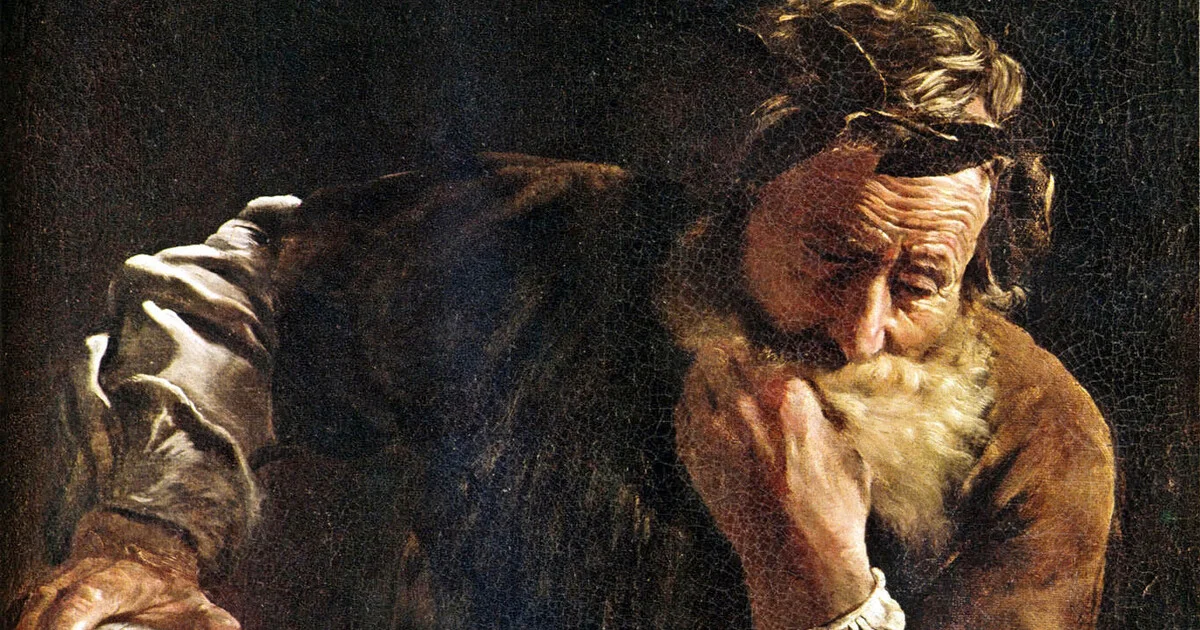
Hero image: Domenico Fetti, Archimedes Thoughtful (c. 1620), Gemäldegalerie Alte Meister, Dresden. Public domain.
Footnotes
-
With the possible exceptions of astrophysics, which is fairly remote from practical applications, and a few others like logic, arguably a branch of mathematics. Of course all studies can lead to applications; cryptography and modern crypto-based finance are good examples. ↩
-
Unfortunately this is not really true. AI-created music is taking over the popular music streaming services with disposable background tracks, and AI “slop” art appears all over, and gets significant momentary engagement. But nobody mistakes this pablum for serious work. ↩
-
See Research and Development Expenditures at Colleges and Universities. One key quote: “The 61% contraction in the federally funded share of humanities research far exceeded the 11% shrinkage seen in STEM.” (From 2011 to 2023.)
Also: Harvard Crimson, Sept 2025 where Harvard humanities scholars alone lost over $2M in NEH grants, with specific projects gutted — a medieval-studies digitization project, a Ukrainian literature library editor position, and a 130-year-old Latin dictionary fellowship. ↩
-
I myself have been creating all kinds of open-source software with AI collaboration; see this article and my github. Perhaps in a universal-basic-income world this kind of intellectual cyborg creativity could become more the norm? ↩